What Is Green Tea Brown Liquid Extract?
Green Tea Brown Liquid Extract (Camellia sinensis) is a water-soluble botanical active delivering the full-spectrum polyphenolic profile of Camellia sinensis leaves — including EGCG (Epigallocatechin Gallate), Epicatechin, Catechins, and Polyphenols — in a concentrated brown liquid format for direct incorporation into the water phase of antioxidant serums, anti-aging moisturizers, sebum-regulating toners, photoprotective boosters, and acne-prone skin formulations. INCI: Camellia Sinensis Leaf Extract.
For those new to botanical actives, Green Tea is one of the most extensively researched and clinically validated botanicals in cosmetic science. Its catechin polyphenols — particularly EGCG — represent the highest-potency naturally derived antioxidant complex available to formulators, with thousands of peer-reviewed studies documenting activity across antioxidant protection, photoprotection, anti-aging, sebum regulation, and antimicrobial applications. The brown format delivers the full-spectrum unprocessed polyphenolic profile at higher total catechin concentration than the decolorized clear extract, making it the preferred choice for opaque formulations — moisturizers, anti-aging creams, SPF boosters, and richly botanical skin treatments — where the characteristic amber-brown colour is not a formulation constraint.
At the expert level, Green Tea’s primary bioactive EGCG (Epigallocatechin-3-gallate) is the most abundant and most potent catechin in C. sinensis, operating across multiple converging anti-aging and protective mechanisms simultaneously. EGCG is a potent NF-κB inhibitor — suppressing IκB kinase (IKK) phosphorylation to block NF-κB nuclear translocation and downregulate the full downstream pro-inflammatory cytokine cascade (TNF-α, IL-1β, IL-6, IL-8, COX-2, iNOS). For anti-aging, EGCG inhibits AP-1 transcription factor activation, directly suppressing MMP-1, MMP-3, and MMP-9 expression — the collagen-degrading matrix metalloproteinases responsible for photoaging-induced wrinkle formation. For photoprotection, EGCG absorbs UVB radiation, scavenges UV-generated reactive oxygen species, and inhibits UV-induced AP-1 and NF-κB activation — functioning as an intracellular antioxidant booster that complements topical SPF filters. EGCG also inhibits 5α-reductase — reducing androgen-driven DHT-stimulated sebocyte activity for upstream sebum regulation. Epicatechin and the broader catechin family provide complementary polyphenolic antioxidant activity through multiple free radical chain-breaking mechanisms, with total ORAC values among the highest of any plant-derived ingredient class.
Key Benefits
-
Highest-Potency Polyphenolic Antioxidant — EGCG and the catechin complex deliver among the highest free radical scavenging capacity of any cosmetic botanical; potent ROS neutralization across UV-generated, metabolic, and environmental oxidative stress
-
NF-κB & AP-1 Dual Inhibition — EGCG simultaneously suppresses NF-κB (via IKK inhibition) and AP-1 transcription, downregulating MMP-1/3/9 collagen degradation, COX-2, iNOS, TNF-α, IL-1β, IL-6, and IL-8 — anti-aging and anti-inflammatory through a single transcription factor target
-
MMP Inhibition & Collagen Protection — EGCG-mediated AP-1 suppression directly reduces MMP-1, MMP-3, and MMP-9 expression, protecting the dermal collagen matrix from UV and inflammatory degradation
-
Photoprotective Booster — UV absorption, UV-generated ROS scavenging, and inhibition of UV-induced NF-κB/AP-1 signalling; clinically validated intracellular antioxidant SPF booster and post-UV cellular protection
-
5α-Reductase Inhibition & Sebum Regulation — EGCG inhibits 5α-reductase, reducing DHT-driven sebocyte stimulation and sebum overproduction at the upstream androgen-signalling level
-
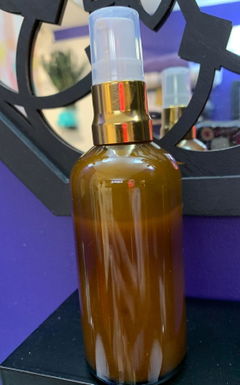
Full-Spectrum Brown Format — Higher total catechin and polyphenol concentration than the decolorized clear extract; the concentrated formulator’s choice for opaque anti-aging and antioxidant formulations
Applications
- Antioxidant-rich anti-aging serums and moisturizers
- Photoprotective SPF booster and post-UV recovery formulations
- Oily and acne-prone sebum-regulating creams and emulsions
- Multi-botanical antioxidant stacks in opaque treatment formulations
- Anti-photoaging and collagen-protective skin treatments
- Scalp and hair antioxidant treatments (DHT + oxidative stress)
Formulation Details
| Property |
Detail |
| INCI Name |
Camellia Sinensis Leaf Extract |
| Botanical Name |
Camellia sinensis |
| Common Names |
Green Tea, Chinese Tea |
| Key Actives |
EGCG, Epicatechin, Catechins, Polyphenols |
| Appearance |
Brown liquid |
| Solubility |
Water-soluble |
| Recommended Use Level |
1–10% (2–5% typical) |
| Incorporation Phase |
Water phase or cool-down (≤40°C) |
| Processing Temperature |
Add at cool-down preferred; catechins and EGCG degrade with prolonged heat and oxidation |
| Grade |
Cosmetic |
| Use |
External use only |
💡 Which Green Tea format is right for you? We offer three Camellia sinensis formats:
• This Brown Liquid Extract — Full-spectrum concentrated extract at higher total catechin content; suited to opaque anti-aging creams, moisturizers, and treatment formulations where colour is not a constraint
• Green Tea Clear Liquid Extract — Decolorized, crystal-clear format; ideal for transparent toners, clear serums, and light emulsions where colour is critical
• Green Tea Extract Powder (10:1) — Standardized dry extract for precise active concentration, anhydrous formulations, and situations requiring known catechin standardization
How to Formulate With Green Tea Brown Liquid Extract
Beginner tip: Add directly to your water phase or at cool-down (≤40°C). Start at 3–5% in an antioxidant moisturizer or anti-aging serum. Green Tea is a consumer-recognised ingredient with powerful “clean antioxidant” positioning — EGCG appears on ingredient lists of premium prestige skincare globally. The Brown format’s higher catechin load makes it ideal as the antioxidant backbone of an opaque anti-aging or SPF-booster cream. Pair with Resveratrol and Ferulic Acid for an elite three-polyphenol antioxidant stack covering complementary radical scavenging mechanisms.
Expert notes:
-
Phase: Water phase or cool-down (≤40°C); catechins, particularly EGCG, are susceptible to oxidative degradation at elevated temperatures and alkaline pH — cool-down addition and acidic pH strongly recommended
-
Usage Rate: 1–10%; 2–5% for antioxidant serums and moisturizers; 3–5% for targeted anti-aging and sebum-regulating treatments; up to 10% for intensive SPF boosters or scalp antioxidant treatments
-
pH: Catechins are stable at pH 3.5–6.0; EGCG degrades rapidly above pH 7.0 — maintain acidic conditions; confirm via TDS; alkaline environments cause rapid catechin oxidation and browning
-
The gold-standard antioxidant stack: Green Tea Brown (EGCG + catechin polyphenols) + Resveratrol (stilbene SIRT1/Nrf2 activation + NF-κB inhibition) + Ferulic Acid (UV antioxidant synergist, enhances polyphenol stability) = the most mechanistically comprehensive water-soluble + oil-phase botanical antioxidant combination available
-
Photoprotection stack: Green Tea Brown (EGCG UV-ROS scavenging + NF-κB/AP-1 post-UV inhibition) + Rosemary Clear (carnosic acid UV antioxidant + rosmarinic acid) as a botanical SPF-booster complex for UV-defensive moisturizers and SPF emulsions
-
Acne + sebum stack: Green Tea Brown (EGCG 5α-reductase + NF-κB anti-inflammatory) + Witch Hazel (hamamelitannin 5-LOX/COX + astringent) + Niacinamide (PPAR-γ sebum + barrier) = the three-mechanism oily/acne treatment in an opaque serum or cream
-
Catechin oxidation note: Brown extract colour indicates natural polyphenol oxidation products — this is expected and does not reduce activity; the brown colour is inherent to the full-spectrum unprocessed extract
-
Preservation: Always include a broad-spectrum preservative — we recommend Geogard ECT at 0.5–1.0%
Pairings — Build a Better Formula
-
Resveratrol Powder — Stilbene polyphenol that activates SIRT1/Nrf2 antioxidant response element and inhibits NF-κB through a mechanism complementary to EGCG; together they create the most mechanistically comprehensive dual-polyphenol antioxidant anti-aging stack in the catalog
-
Ferulic Acid Powder — Hydroxycinnamic antioxidant that amplifies EGCG’s radical scavenging through synergistic hydrogen donation and stabilises co-formulated polyphenols; the essential antioxidant synergist for any Green Tea-centred anti-aging formulation
-
Green Tea Clear Liquid Extract — The transparent-format counterpart; use Brown in opaque cream bases and Clear in toners and clear serums to offer the full Green Tea range across different formulation types
-
Witch Hazel Clear Liquid Extract — Hamamelitannin 5-LOX/COX anti-inflammatory and astringent pore-refining active that stacks with Green Tea’s EGCG 5α-reductase/NF-κB for a dual-botanical sebum and acne-targeting treatment
-
Rosemary Clear Liquid Extract — Carnosic acid and rosmarinic acid antioxidant complement to EGCG’s catechin ROS scavenging; the botanics-only photoprotective antioxidant pairing for UV-defensive formulations
-
Niacinamide Vitamin B3 Powder — Sebum regulation via PPAR-γ agonism and barrier ceramide stimulation that adds a distinct androgen-independent sebum control mechanism to Green Tea’s EGCG 5α-reductase inhibition for comprehensive oily skin treatment
Suggested Formula
A multi-mechanism antioxidant anti-aging moisturizer combining Green Tea Brown’s EGCG NF-κB/AP-1/MMP inhibition and photoprotective activity with Resveratrol’s SIRT1/Nrf2 activation, Ferulic Acid’s antioxidant synergy, and Niacinamide’s barrier ceramide stimulation — the most complete polyphenol antioxidant + barrier-support emulsion achievable with catalog botanicals.
Method: Dissolve HA LMW, Niacinamide, and Ferulic Acid in warm water (≤40°C) — Phase A. Heat oil phase (B) to same temperature; combine phases and homogenize to emulsion. Cool to ≤40°C. Pre-dissolve Resveratrol in a small amount of propanediol. At cool-down, add Green Tea Brown Extract, Resveratrol solution, D-Panthenol, and Geogard ECT (Phase C). Adjust pH to 4.5–5.5 to protect catechin stability. Fill into airless pump.
Target pH: 4.5–5.5
Recommended use: Apply morning and/or evening to cleansed skin. In the morning, always follow with broad-spectrum SPF — Green Tea’s EGCG provides intracellular antioxidant UV-defense but does not replace physical/chemical SPF protection.
Storage & Shelf Life
- Store tightly closed in a cool, dark place away from heat and direct light
- Catechins are sensitive to light, heat, and oxidation — amber or opaque packaging recommended for finished formulations
- Avoid prolonged exposure to temperatures above 25°C
- Refer to your supplier’s COA for confirmed shelf life data
Safety & Handling
- For external use only — not for internal consumption
- Avoid contact with eyes; if contact occurs, rinse thoroughly with water
- Conduct a patch test before use in finished formulations
- Keep out of reach of children
- Refer to the Safety Data Sheet (SDS) for full handling and safety information: SDS