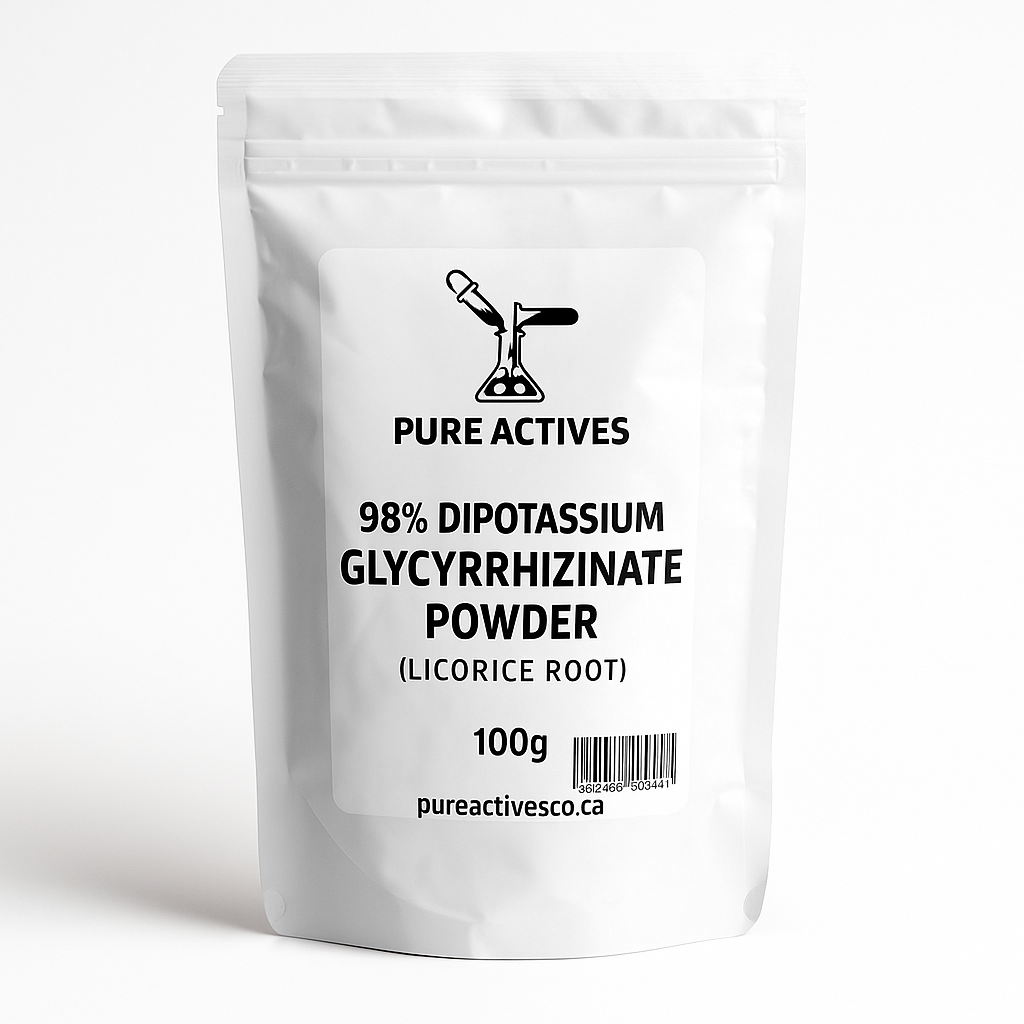
Dipotassium glycyrrhizinate is a derivative of glycyrrhizin, which is extracted from the root of the licorice plant (Glycyrrhiza glabra). It's commonly used in skincare products for its soothing and anti-inflammatory properties. Here are some key points about dipotassium glycyrrhizinate:
Benefits:
-
Soothing: It helps to calm irritated and inflamed skin, making it ideal for sensitive or reactive skin types.
-
Anti-Inflammatory: It reduces redness and inflammation, which can be beneficial for conditions like eczema and rosacea.
-
Skin Conditioning: It improves the texture and feel of the skin by reducing flaking and restoring suppleness.
-
Hydration: It helps to preserve hyaluronic acid content in the skin, maintaining hydration and a youthful appearance.
Uses:
-
Moisturizers: It's often included in moisturizers to soothe and hydrate the skin.
-
Serums: It can be found in serums designed to reduce redness and inflammation.
-
Masks: It's used in masks to provide calming and anti-inflammatory benefits.
-
Post-Shave Products: It's beneficial in post-shave products to soothe and calm the skin.
Safety Profile:
-
Well-Tolerated: Generally recognized as safe for most skin types, except for those with an identified allergy to it.
-
Pregnancy Caution: Limited research is available on its use during pregnancy, so caution is advised.
Formulation
-
Solubility: Dipotassium glycyrrhizinate is water-soluble, making it easy to incorporate into aqueous formulations.
-
Concentration: It is typically used at concentrations ranging from 1.0% to 10.0% depending on the desired effect and product type.
-
Compatibility: It is compatible with a wide range of ingredients, including other active compounds, surfactants, and emulsifiers. It is commonly used in formulations such as creams, lotions, serums, and gels.
-
pH Range: Dipotassium glycyrrhizinate is stable in formulations with a pH range of 4.0 to 7.0.