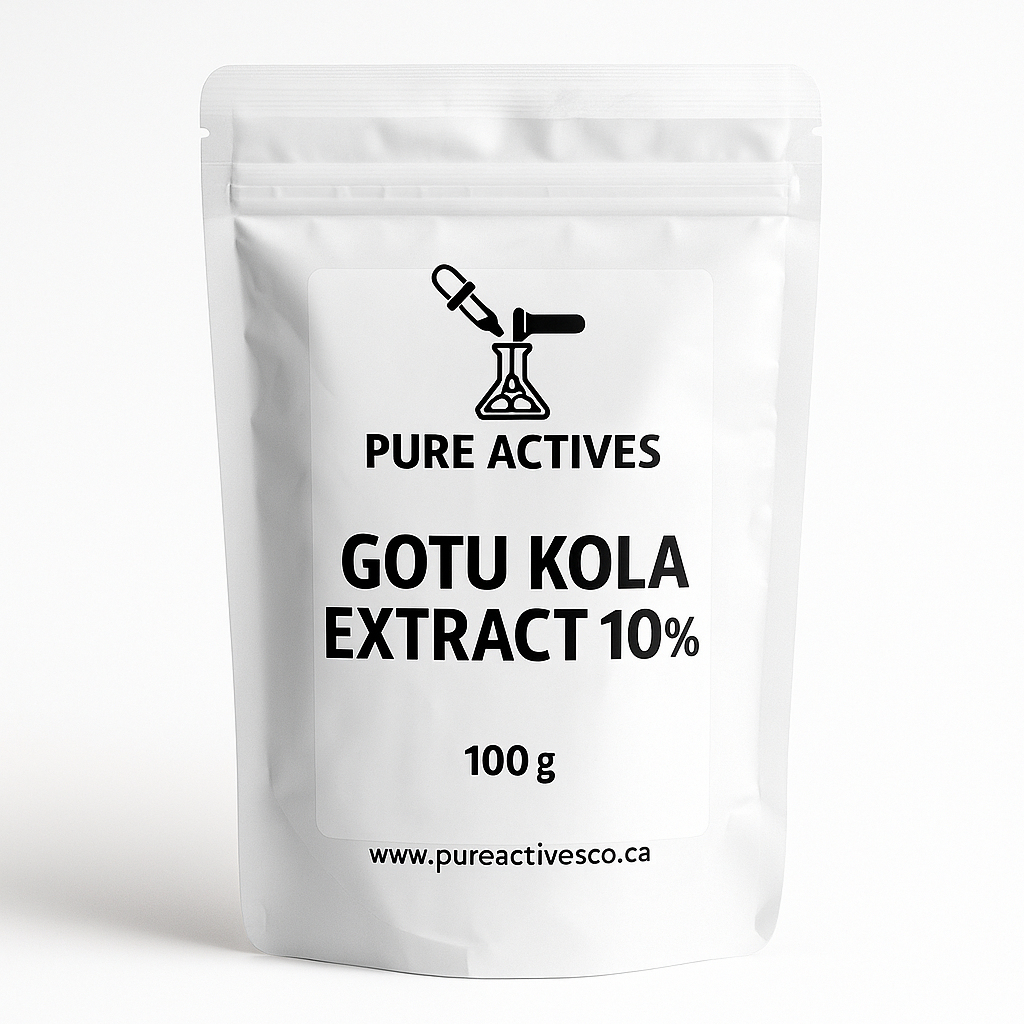
Gotu Kola Extract Powder 10% (Centella asiatica)
Professional cosmetic ingredient — not a finished product. Standardized to 10% total triterpenoids.
Gotu Kola (Centella asiatica) is one of the most clinically validated botanical actives in modern cosmetic science — and one of the few where the science fully supports the traditional reputation. Used for centuries in Ayurvedic and Traditional Chinese Medicine as the “herb of longevity,” its active triterpenoid compounds are now backed by peer-reviewed research demonstrating measurable effects on collagen synthesis, barrier repair, wound healing, and inflammation. This 10% standardized extract delivers a consistent, reliable dose of those actives in every batch.
Understanding “10% Standardized” — What It Means for Formulators
This product is a 10% standardized extract — not a 10:1 ratio extract. These are different things:
-
10% standardized means the extract is guaranteed to contain a minimum of 10% total triterpenoids (asiaticoside + madecassoside + asiatic acid + madecassic acid) by weight, regardless of batch. This ensures consistent biological activity.
- A 10:1 ratio extract simply means 10kg of raw plant was used per 1kg of extract, but makes no guarantee about the actual concentration of active compounds.
Standardization is the higher-quality specification — you know exactly what active concentration you’re formulating with.
Usage rate: 0.5–5% — use at standard extract rates. No division required. This is not a concentrated ratio extract.
Key Specs
| INCI |
Centella Asiatica Extract |
| CAS No. |
84696-21-9 |
| Standardization |
10% total triterpenoids (asiaticoside, madecassoside, asiatic acid, madecassic acid) |
| Appearance |
Fine beige to light brown powder |
| Solubility |
Water-soluble |
| Usage Rate |
0.5–5% (1–2% most common) |
| pH Stability |
4.5–7.0 |
| Processing Temp |
Cold or hot process; add to water phase or at cool-down (<40°C preferred) |
| Shelf Life |
24 months sealed, cool, dry |
| Grade |
Cosmetic grade; vegan |
| Country of Origin |
China |
The Science: How the Triterpenoids Work
The four key triterpenoids in Centella asiatica each contribute distinct mechanisms:
-
Asiaticoside — stimulates collagen type I and III synthesis by upregulating TGF-β signaling in fibroblasts; promotes wound healing and re-epithelialization; the primary anti-aging and firming active
-
Madecassoside — the most potent anti-inflammatory triterpenoid; inhibits NF-κB and reduces pro-inflammatory cytokines (IL-1β, TNF-α); clinically effective for redness, rosacea, and reactive skin
-
Asiatic Acid — antioxidant; inhibits MMP-1 (collagenase) to protect existing collagen from degradation; supports barrier lipid synthesis
-
Madecassic Acid — anti-inflammatory and antioxidant; works synergistically with madecassoside to reduce erythema and support barrier integrity
Together, these four compounds create a multi-mechanism active system that addresses inflammation, collagen loss, barrier dysfunction, and oxidative stress simultaneously — which is why Cica (Centella asiatica) has become one of the defining actives of modern K-beauty and clinical skincare.
Key Benefits
-
Collagen synthesis stimulation — asiaticoside upregulates TGF-β; measurable increases in collagen type I and III with consistent use; reduces fine lines and improves skin firmness
-
Anti-inflammatory & redness reduction — madecassoside inhibits NF-κB; clinically effective for rosacea, erythema, and reactive skin; one of the most evidence-backed botanical anti-inflammatories available
-
Barrier repair — supports ceramide synthesis and tight junction protein expression; reduces TEWL; accelerates recovery of compromised skin
-
Wound healing & post-procedure recovery — promotes re-epithelialization and fibroblast proliferation; standard active in post-laser, post-peel, and tattoo aftercare formulations
-
Antioxidant protection — asiatic acid and madecassic acid scavenge free radicals and inhibit MMP-mediated collagen degradation
-
Hydration & suppleness — improves skin moisture retention and elasticity with regular use
How to Formulate With It
-
Usage rate: 0.5–5% — this is a standardized extract, not a ratio concentrate; use at full percentage. 1–2% is most common for serums and moisturizers; up to 5% for targeted repair or post-procedure products.
-
Water phase incorporation: Dissolve in the water phase during heating, or pre-dissolve in a small amount of warm water and add at cool-down (<40°C). Both approaches work well.
-
pH: Stable at pH 4.5–7.0. Compatible with both acidic serums and neutral moisturizers.
-
Chelate: Include 0.1% Sodium Phytate to protect against metal-ion-catalyzed degradation and extend formula stability.
-
Preserve: Use a broad-spectrum preservative such as Euxyl PE 9010 at your target pH.
Applications
- Barrier repair creams and moisturizers (1–2%)
- Soothing and calming serums for sensitive/rosacea skin (1–2%)
- Anti-aging and firming formulations (2–3%)
- Post-procedure and recovery skincare (3–5%)
- Eye creams and targeted treatment products (0.5–1%)
- Redness-reducing toners and essences (0.5–1%)
- Tattoo aftercare and wound-care balms (2–5%)
Pairings & Suggested Formulas
-
Niacinamide Vitamin B3 Powder — the definitive Cica + Niacinamide barrier repair serum; both are anti-inflammatory and barrier-strengthening; niacinamide adds ceramide synthesis support and brightening
-
D-Panthenol Liquid 100% — enhanced barrier repair and wound healing; panthenol stimulates keratinocyte proliferation while Cica drives collagen synthesis and reduces inflammation
-
Allantoin Powder — soothing + skin conditioning; allantoin’s keratolytic and soothing properties complement Cica’s anti-inflammatory action in sensitive skin formulas
-
Hyaluronic Acid LMW — hydration + barrier repair serum; HA draws water in while Cica repairs the barrier that retains it
-
Sodium Phytate — chelator; always include at 0.1% for formula stability
-
Azelaic Acid Powder — rosacea-targeted formula; Cica’s madecassoside and azelaic acid’s antimicrobial + anti-inflammatory mechanisms are highly complementary for redness and reactive skin
Example formula: 2% Gotu Kola Extract 10% + 4% Niacinamide + 2% D-Panthenol + 0.1% HA LMW + 0.1% Sodium Phytate in a water/glycerin base, pH 5.5–6.0, preserved with 0.8% Euxyl PE 9010. A comprehensive barrier repair and anti-inflammatory serum.
Storage & Safety
Store tightly sealed in a cool, dry place at 10–25°C away from direct light and moisture. Shelf life: 24 months when properly stored. For external use in finished cosmetic formulations only. Not for internal use. Consult SDS before use.