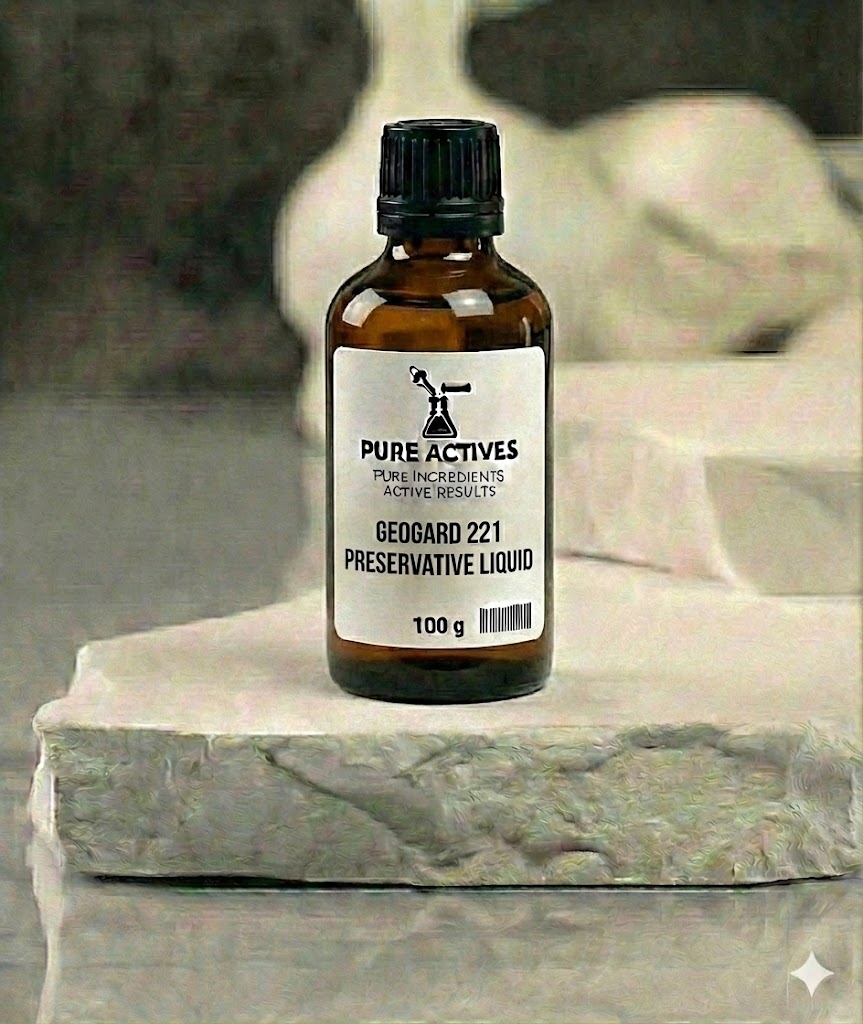
Geogard 221 is a broad-spectrum preservative made to keep your water-based products from spoiling (bacteria, yeast, mold). It’s one of those “quiet hero” ingredients: your formula can look perfect today, but without a preservative, it can start growing microbes fast—especially in creams, lotions, toners, shampoos, body wash, gels, and wipes.
It’s also a favorite for formulators who want a preservative option that’s ECOCERT & COSMOS compliant (and listed as NaTrue certified / Soil Association approved in supplier literature).
What it’s best for
Lotions, creams, body butters, facial moisturizers
Toners, gels, water-based serums, face/body mists
Shampoo, conditioner, body wash, liquid hand soap
Wipes + many everyday personal care products
How to Use (step-by-step)
Step 1 — Make sure your pH is in the safe zone
Geogard 221 works best between pH 2–7. Above pH 7, preservation strength can be compromised.
Step 2 — Add it near the end (easy + reliable)
Supplier guidance says it can be added at room or elevated temperatures, and it’s compatible with many processes.
But for easiest success (and to reduce unnecessary loss of volatile components), most formulators add it in cool-down once your batch is no longer hot.
Step 3 — Use the right amount
Recommended use level: 0.2% – 1.1% (as supplied).
“How much in 100g?”
-
0.6% = 0.6g (common starting point)
-
0.8% = 0.8g (stronger protection for many emulsions)
-
1.0% = 1.0g (upper practical zone for many products)
Pro Tips
-
Don’t skip preservation in water-based products. If it contains water (or aloe juice/hydrosols), it needs a preservative system.
-
Check your pH at the end. If your formula drifts above pH 7, this preservative may underperform.
-
Expect mild natural interactions: some anionic systems (like certain carbomers/surfactants) may cause discoloration—always do a small test batch.
-
If you’re making products to sell, do a micro/challenge test for real confirmation (best practice).
COA
SDS
TDS